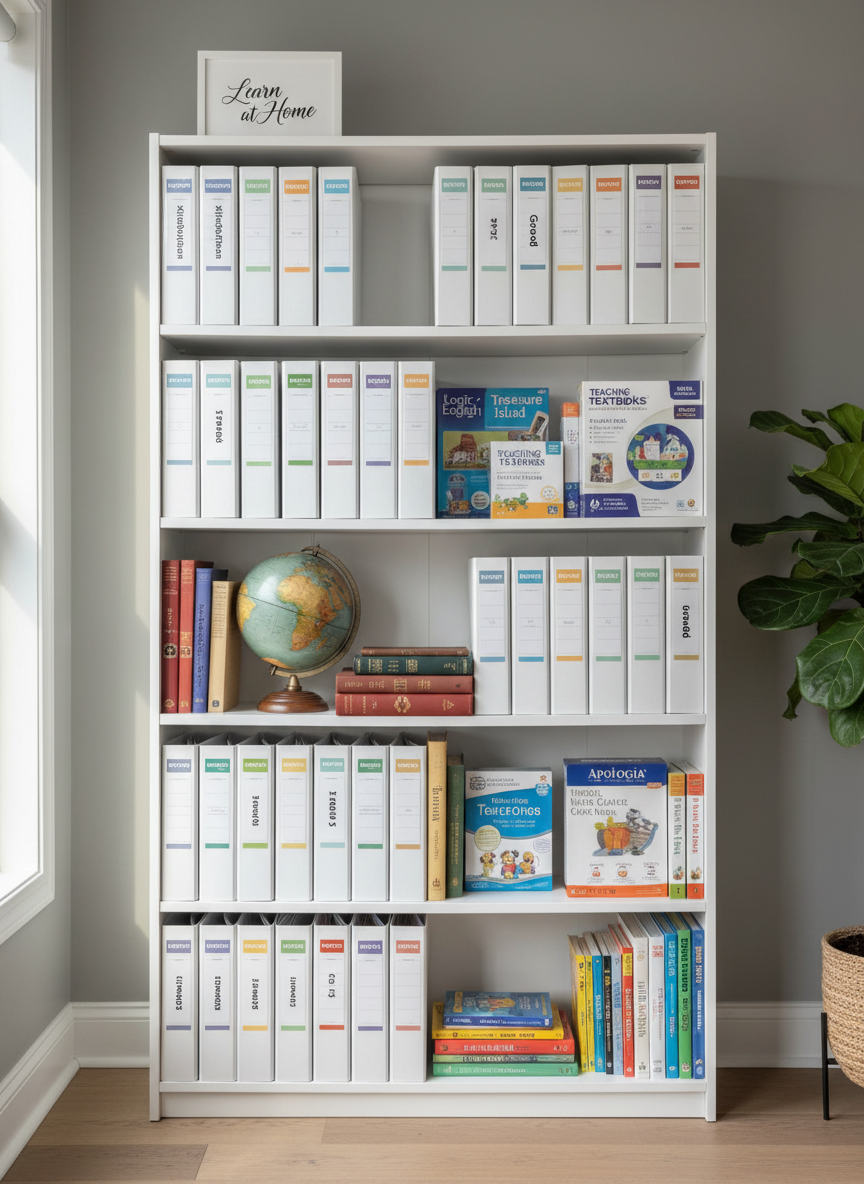
How Our Curriculum Is Organized
Emily Co. guides you from early learners to middle school with a clear, free curriculum, organized in multi-year phases and simple class levels, so you always know what to teach next in every subject. The curriculum is designed to be extremely customizable, with a focus on play, to support each family and child with their unique learning goals.
Curriculum Overview
See how each free phase and class level fits together from Pre-kindergarten through the end of elementary school.
Here is the summary and structural alignment of the curriculum framework, based on child development theory.
Emily Co. Curriculum Framework
The curriculum is structured around four distinct, child-directed phases spanning ages 2 to 13, replacing traditional grading with developmental milestone targets .
Pre-K & Kindergarten (Ages 2-4): Phase One — Independence
- Phase Summary: This phase shifts away from industrial-era repetition and memorization, focusing instead on building basic autonomy, confidence, and self-expression . The coursework covers fundamental living and creative mechanics through classes like Life Design (habits, routines, and emotional regulation), Aesthetic and Productive Spaces, Imaginative Style, Creation Studio, Performance Stage, Neighborhood Explorations, and a basic Introduction to Languages (counting numbers and the alphabet) .
- Developmental Theory Alignment: This phase beautifully aligns with Erik Erikson’s psychosocial stage of Autonomy vs. Shame and Doubt (typically ages 1–3) and moves into Initiative vs. Guilt (ages 3–6), where children naturally push to assert control over their environments, make independent decisions, and differentiate their own identities . Additionally, it mirrors Jean Piaget’s Preoperational Stage of cognitive development, where learning is heavily play-oriented, intuitive, and centered around symbols, drawings, and language acquisition rather than concrete logic .
Grades 1 & 2 (Ages 5-7): Phase Two — Artistry
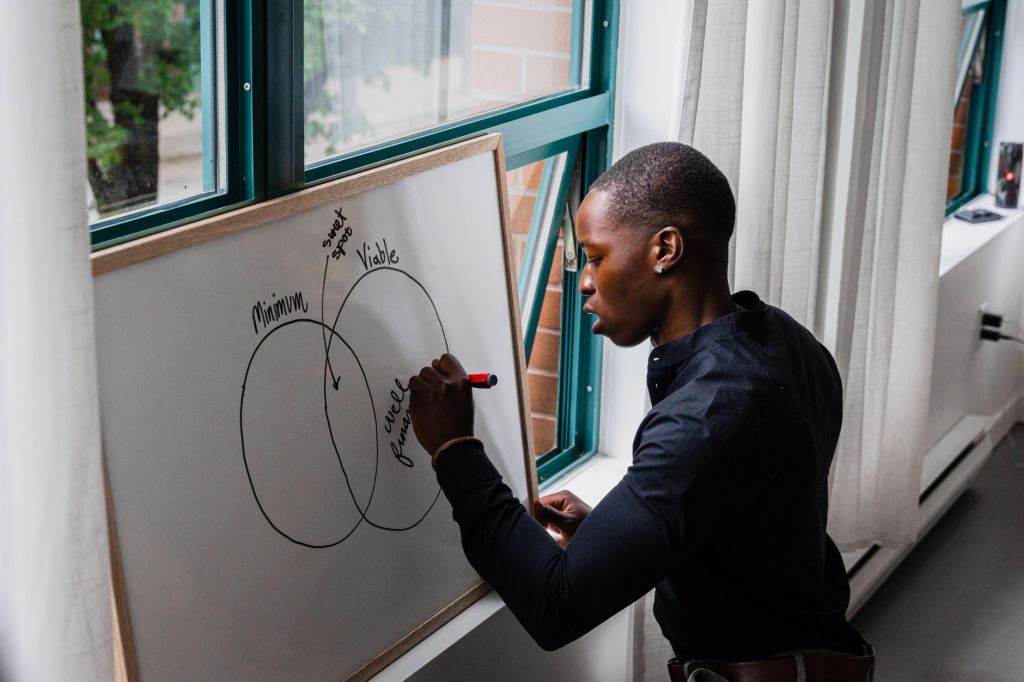
- Phase Summary: Phase Two shifts focus toward developing a child’s agility, passion, and intuitive exploration . Rather than adhering to static lectures, students utilize essential research tools to investigate their personal hobbies and shape their own learning aesthetics . Core coursework includes Gallery Tours (art history survey and basic geometry), Languages for Creators (linguistics, coding, basic math, and logic), Learning Detectives (source verification and anti-misinformation), Global Political Processes (community and current events), Wildlife, Wildflowers, and Wilderness (nature walks, the scientic method, basic survival skills, and plant-growing), and Idea Brainstorming (viability testing and task mapping) .
- Developmental Theory Alignment: This phase anchors itself directly within Piaget’s transition from the late Preoperational to the early Concrete Operational Stage, where kids begin organizing thoughts logically but learn best through tangible, real-world context like nature study, physical mapping, and hands-on creativity . It also embraces Lev Vygotsky’s Sociocultural Theory by encouraging children to view language, numbers, and coding systems as cultural, interactive tools for real-life communication, fostering an active mindset over passive information consumption .
Grades 3 & 4 (Ages 8-9): Phase Three — Partnership
- Phase Summary: This phase introduces realistic applications, personal responsibility, and collaborative dynamics . Year one is dedicated to advancing foundational skills under the guidance of carefully selected expert mentors . Year two introduces peer-to-peer collaboration with a sibling or friend to co-research topics, resolve complex problems, and build creative work for early resumes . Core courses encompass Storytelling, Arithmetic for Entrepreneurs, Time Traveling Skills (historical deep dives), Musically Gifted, Cryptology, Citizens’ Guide to Advocacy (incorporating CBT/DBT behavioral basics), and Your Intellectual Property .
- Developmental Theory Alignment: This phase leverages Erik Erikson’s stage of Industry vs. Inferiority, during which children aged 5–12 take immense pride in mastering complex skills, producing tangible outcomes, and feeling a sense of competence through practical tasks . Furthermore, by incorporating peer collaboration and mentorship, it capitalizes on Vygotsky’s Zone of Proximal Development (ZPD), asserting that social interaction, scaffolded expert guidance, and cooperative problem-solving allow children to achieve much deeper cognitive growth than working in total isolation .
Grades 5 & 6 (Ages 10-13): Phase Four — Discovery
- Phase Summary: Phase Four centers completely around exploration and connecting complex concepts . The first year provides a wide sampling of diverse hobbies and pastimes to discover what brings the student joy . The second year focuses on mastering beginner-to-intermediate skills within those selected passions and weaving them cleanly into individual lifestyle goals . Highly integrated coursework covers Physical and Psychological Bonds (nutrition and sports), Portraiture, Perspective, and Personality (abnormal and developmental psychology), Arts Empowered by Technology (digital media and film scoring), Multiverse Explorations (natural sciences and applying the scientific method to physical sciences), Novels and Poetry for Lost Souls, Mathematics for Arts and Trades (applied geometry/trigonometry), and Gaming and Puzzle Solving (strategy and programming) .
- Developmental Theory Alignment: This phase targets the onset of early adolescence, transitioning directly into Piaget’s Formal Operational Stage, where the developing brain unlocks the ability to process abstract concepts, form systematic hypotheses, and synthesize disparate fields of study . Simultaneously, it honors the early stages of Erikson’s Identity vs. Role Confusion milestone; by prioritizing self-directed specialization, sampling various sub-cultures, and exploring creative personality psychology, it gives pre-teens a safe, supportive framework to explore their unique talents and shape an authentic sense of self .

Daily Structure
Explore visual charts, tables, and concise summaries that break down every phase, class level, and subject into a daily routine, making it simple to scan requirements, compare options, and plan your family’s free homeschool year at a glance.


 Emily Co.